
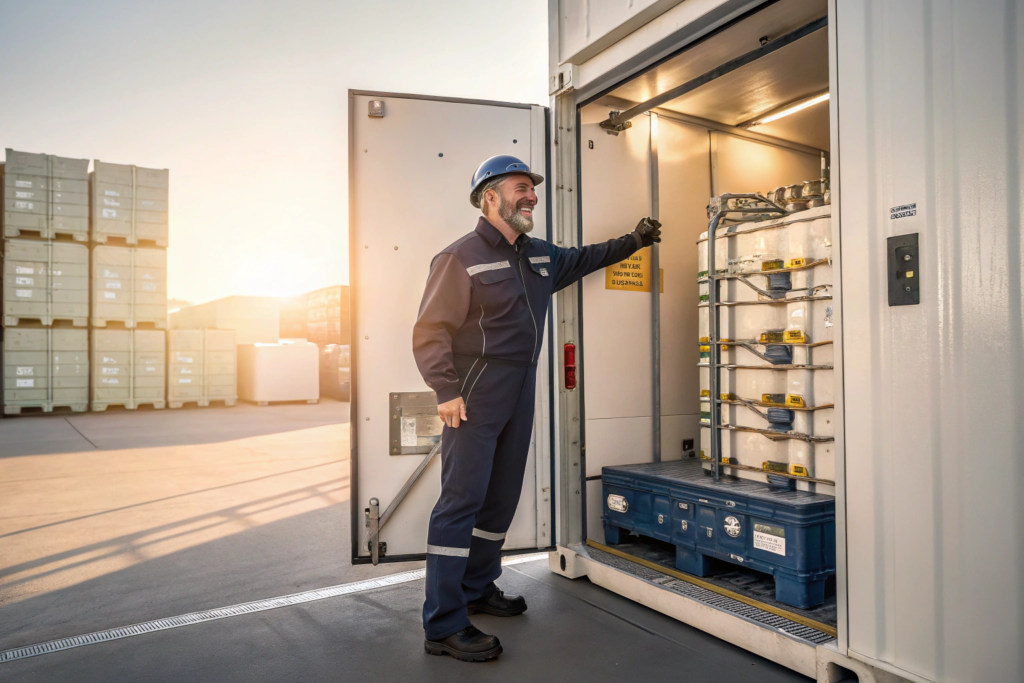
Are you tired of poor-quality solenoid valves or delayed shipments? Choosing the wrong supplier can waste time and hurt your business.
You should evaluate a solenoid valve supplier based on quality, lead time, service, and their understanding of your industry.
I’ve made this mistake before—placing a bulk order only to find out half the parts failed within weeks. Here’s how I learned to choose smarter.
[Table of contents]
Why does supplier reliability matter so much in transport refrigeration?
In this industry, reliability isn't just a buzzword—it's your bottom line.
An unreliable solenoid valve supplier leads to equipment failure, delivery delays, and unhappy customers.

Equipment downtime costs more than just money
Every hour a refrigerated trailer is down, you risk spoiled goods. That leads to:
| Issue | Impact |
|---|---|
| Delayed service | Lost customer trust |
| Extra repair cost | Increased operating cost |
| Missed delivery windows | Contract penalties |
Your reputation is on the line
I remember one customer who told me: “I don’t mind paying more, as long as I can count on it working the first time.” That stuck with me.
What criteria should I check when selecting a solenoid valve supplier?
Don't get fooled by a glossy catalog. Dig deeper.
Look at product quality, certifications, lead time, communication, and long-term service support.
Start with the product specs
Always ask for:
- Real performance data (pressure, flow rate)
- Material details
- Compatibility with brands like Thermo King or Carrier
Verify the supplier’s experience
Ask how many years they’ve served your industry. Transport refrigeration isn’t the same as HVAC or factory automation.
Test their responsiveness
Try emailing them at night or calling over the weekend. A good supplier replies fast—even across time zones.
How do I evaluate the actual quality before placing a big order?
No one wants a warehouse full of faulty parts.
Request samples, read return policies, and test parts in real working conditions.
My sampling checklist
When I test samples, I check:
- Installation fit: Does it match OEM specs?
- Operation time: How fast does it activate?
- Durability: Does it survive vibration and moisture?
Sample case: I once rejected a supplier because...
Their part worked fine in the lab. But once mounted on a moving trailer, it failed due to weak coil casing.
Is price the most important factor?
No. Cheap now often means expensive later.
You should weigh price against part lifespan, return rate, and customer satisfaction.
Look at the long-term cost
| Option | Unit Price | Return Rate | Real Cost |
|---|---|---|---|
| Supplier A | $12 | 20% | $14.40 |
| Supplier B | $16 | 1% | $16.16 |
Don't let short-term savings ruin long-term reputation
Fleet customers won’t forgive repeat failures, even if you saved $4 per unit.
Should I work with multiple suppliers?
It depends on your growth stage and volume.
In early stages, focus on 1–2 suppliers. As you grow, diversify with backups.
My strategy
I usually:
- Start with one trial supplier
- Once tested, move to framework agreement
- Keep a backup for high-volume SKUs
Conclusion
Pick your solenoid valve supplier like you’d pick a business partner—carefully and strategically。